Performance and Insights of ASX Small Cap Index
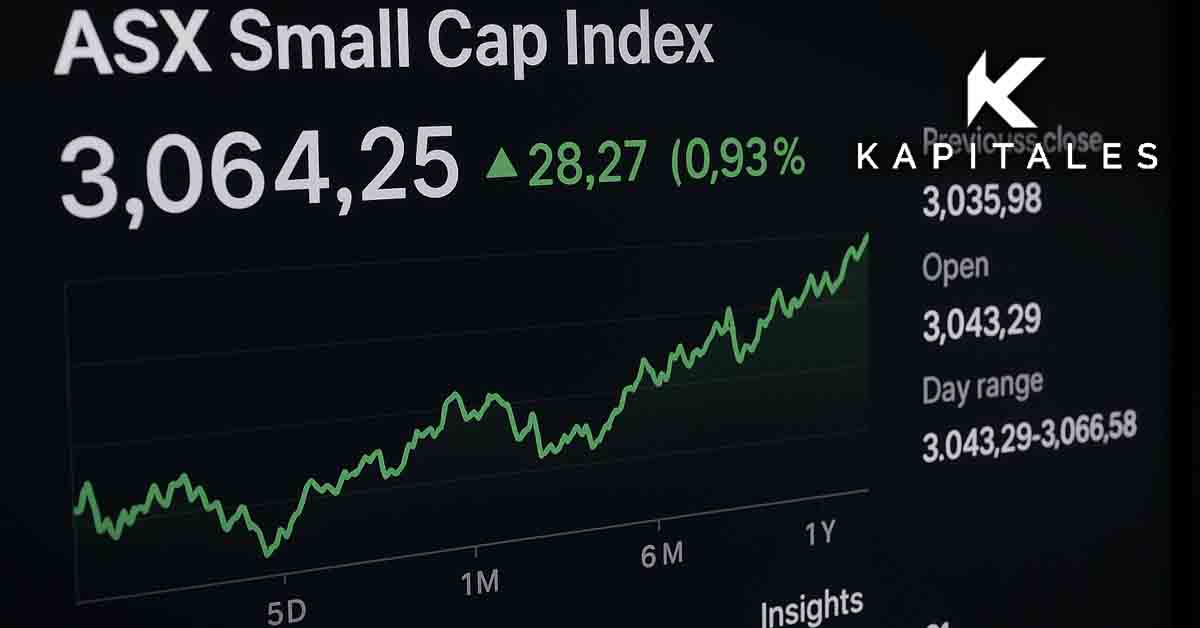
What is the ASX Small Ordinaries Index?
The S&P/ASX Small Ordinaries Index (XSO) represents the performance of smaller companies listed on the Australian Securities Exchange, typically those outside the ASX 100 by market capitalisation but inside the ASX 300. It is the main benchmark for investors seeking exposure to Australian small-cap stocks, which often offer higher growth potential than large caps but come with more volatility and risk.
The XSO covers a diverse range of sectors, including technology, healthcare, mining and consumer services. Many of its members are in expansion or early growth phases, so investors watch the index for opportunities to capture significant capital gains. Because of lower liquidity and higher sensitivity to sentiment and economic news, moves in the XSO are often more pronounced than in the ASX 200.
Compare it with the ASX 300 and All Ordinaries for a broader view of the market.
ASX Small Ordinaries: Key Facts
| Index code | XSO |
|---|---|
| Constituents | Around 200 companies, ranked roughly 101st–300th by market capitalisation |
| Relationship | ASX 300 minus ASX 100 |
| Weighting method | Float-adjusted market capitalisation |
| Index provider | S&P Dow Jones Indices (S&P/ASX Small Ordinaries) |
XSO Index Chart & Technical View
ASX Small Cap Companies List
Top Movers Driving XSO Index Performance
Based on market capitalisation and index composition, some of the largest weights in the XSO are:
- HUB24 Ltd (ASX: HUB) – Leading investment and superannuation platform provider.
- Ebos Group Ltd (ASX: EBO) – Major healthcare and pharmaceutical distribution company.
- Netwealth Group Ltd (ASX: NWL) – Wealth management and investment platform provider.
- Ventia Services Group Ltd (ASX: VNT) – Essential infrastructure and services contractor.
- Pinnacle Investment Management Group Ltd (ASX: PNI) – Diversified investment management group.
Index weights change with each rebalance, as fast-growing companies can graduate into the ASX 100.
Small Ordinaries vs MidCap 50 vs ASX 200
| Feature | Small Ordinaries (XSO) | MidCap 50 (XMD) | ASX 200 (XJO) |
|---|---|---|---|
| Companies covered | Ranked ~101–300 | Ranked 51–100 | Top 200 |
| Company size | Small caps | Mid caps | Large and mid caps |
| Typical volatility | Higher | Moderate | Lower |
| Main appeal | Growth potential | Balance of growth and stability | Broad market exposure |
ASX Small Cap Outlook
The ASX Small Ordinaries Index (XSO) outlook remains mixed, reflecting both opportunities and risks in Australia's small-cap segment. Easing inflation and expectations of interest rate cuts could support a valuation recovery, but earnings momentum among smaller companies is still uneven. Technology, healthcare and infrastructure services are well positioned for growth, while consumer-facing businesses may face demand headwinds.
Increased capital expenditure and government spending are also likely to provide a tailwind. However, higher volatility and sensitivity to macroeconomic shifts suggest investors should expect fluctuating performance, with select quality small caps offering the strongest long-term upside.
Frequently Asked Questions
What is the ASX Small Ordinaries Index (XSO)?
The S&P/ASX Small Ordinaries (XSO) is the main benchmark for Australian small-cap shares. It tracks companies ranked roughly 101st to 300th by market capitalisation on the ASX, i.e. the ASX 300 excluding the ASX 100.
How many companies are in the ASX Small Ordinaries?
The Small Ordinaries contains around 200 companies: the members of the ASX 300 that are not in the ASX 100. The list changes as companies grow into the ASX 100 or fall out of the ASX 300.
What is the difference between the Small Ordinaries and the ASX 200?
The ASX 200 is dominated by large companies such as the big banks and miners, while the Small Ordinaries excludes the 100 largest companies entirely. That makes the XSO more focused on smaller, faster-growing businesses, and usually more volatile.
Why are small-cap stocks more volatile?
Small companies usually have lower trading liquidity, less diversified earnings and greater sensitivity to interest rates, economic conditions and market sentiment. That can lead to larger price swings than in large-cap stocks, in both directions.
What is the difference between XSO and the ASX Emerging Companies index?
The Small Ordinaries covers established small caps ranked about 101 to 300. The S&P/ASX Emerging Companies index (XEC) covers even smaller, micro-cap companies outside the ASX 300.
Conclusion
The ASX Small Ordinaries Index (XSO) reflects the growth potential of Australia's smaller listed companies, offering exposure to innovative and expanding sectors. While the index is sensitive to economic cycles, interest rate movements and investor sentiment, it also provides opportunities to outperform larger indices when conditions stabilise.
With diversification across emerging leaders in healthcare, technology and infrastructure, the XSO remains a valuable benchmark for growth-oriented investors. Careful stock selection and a focus on quality businesses will be key to balancing higher risk with long-term return potential. Explore the Kapitales ASX screener to research individual small caps.